
How to Search Sibley County Traffic Court Records
The best starting point is the citation or case itself. Sibley County traffic cases show up in the district court system, and the county district court page at mncourts.gov/find-courts/sibley is the local court contact point. For payment, the Minnesota Court Web Payment portal and the Court Payment Center handle payable citations, while the court calendar and MCRO show the public case and hearing trail.
For local follow-up, Sheriff Patrick Nienaber's office at www.sibleycounty.gov/302/Sheriff can matter when the traffic stop led to a stop, tow, or arrest, and County Attorney contact at www.sibleycounty.gov/196/Attorney helps when the citation turned into a criminal traffic or DWI case. Recorder Kathy Dietz handles marriage and vital records separately at www.sibleycounty.gov/259/Recorder, which is a useful reminder that traffic files stay in court, not in the recorder office.
- Open the citation or court case number and confirm the county is Sibley.
- Check the district court docket or payment portal for the current case status.
- Use the court calendar to see the next hearing, if one is scheduled.
- Contact the Court Administrator if the record is older, sealed, or not showing online.
- Use the state driver record only when you need license history, not the court file itself.
Which Court Handles Traffic Cases in Sibley County
There is no separate county court, justice of the peace court, or municipal court of record in Sibley County. Minnesota District Court handles the filed traffic case, and that includes payable citations, contested citations, criminal traffic, and DWI matters when they are filed as court cases. The county calendar confirms the court uses district court case numbers, including violation bureau style matters.
That structure keeps the filing path simple, even if the arrest or citation began with a local officer. If the ticket is payable, the payment path may be different from the hearing path. If the matter is contested or a criminal traffic case, it belongs in the district court file and not in a state driver record lookup.
| Court | Traffic Cases Handled | Address |
|---|---|---|
| Sibley County District Court | Payable citations, contested tickets, criminal traffic, DWI-related filings | 400 Court Avenue, Gaylord, MN 55334 |
| Sibley County Sheriff's Office | Traffic stops, arrests, transport, local law-enforcement follow-up | 419 Harrison Street, Gaylord, MN 55334 |
| Sibley County Attorney | Criminal complaints tied to traffic crimes | County office, Gaylord, MN |
Types of Traffic Cases on Record
Traffic records in the county cover more than parking tickets. Minnesota district court traffic files can include ordinary moving violations, petty misdemeanors, criminal traffic charges, and DUI or DWI-related cases when those charges are filed through the court. The public record may also show citation numbers, case numbers, and hearing settings even when the fine has already been paid.
- Moving violations - speeding, lane use, stop-sign violations, and other road-use offenses.
- Non-moving violations - equipment issues, insurance issues, or similar citation-based matters.
- Parking matters - less common in the district court file, but still may appear when a citation is filed.
- Commercial vehicle and CDL matters - traffic cases that can carry separate licensing consequences.
- Photo enforcement - only if a citation was issued and filed into the court system.
What Sibley County Traffic Court Records Show
A traffic case file is usually enough to answer the basic public questions: what the citation was, which court hears it, when the hearing is set, and whether the matter is paid or still open. The court file is also what you need if you want to contest a citation or understand the next deadline. It is not the same thing as the state driver's license record.
| Field | What It Shows |
|---|---|
| Citation Number | The number used to find the ticket in payment and court systems. |
| Charge / Statute | The traffic offense or statute cited on the case. |
| Court Date | The first hearing or a later appearance date. |
| Disposition | Paid, dismissed, continued, convicted, or otherwise resolved. |
| Fine Amount | The amount due if the matter is payable or has been resolved with a fine. |
| Points Assessed | Any license points or reporting consequence when shown in the record. |
Searching by Citation Number vs by Name
Citation number searches are the cleanest traffic searches because they land on one exact case. Name searches can work, but they produce more noise when the county has more than one driver with a similar name or when the citation was written with a nickname, middle initial, or misspelled surname. If you already have the citation, use it first. If not, use the name, date of birth, or driver's license number only when the payment or court portal allows it.
| Search Field | Type | Required | Notes / Format |
|---|---|---|---|
| Citation number | Text | Yes | Best starting point for payable citations. |
| Case number | Text | Yes, if known | Used when the citation became a district court case. |
| Driver's license number | Text | No | Helpful for payment and some search portals. |
| Name | Text | No | Use carefully when the spelling may vary. |
Paying or Contesting a Sibley County Traffic Ticket
Traffic payment in Minnesota is not just a checkout step. Paying usually acts as a guilty plea, so the choice should be deliberate. If the citation is new, wait for the payment system to catch up before assuming the case is missing. If you want to contest the citation, do not pay first. The court website and payment center will generally point you toward the next hearing or the deadline to respond.
When the case is a criminal traffic matter or a DWI, the county attorney and district court matter more than the payment portal alone. That is also when the sheriff office may be involved if the traffic stop turned into an arrest, tow, or booking. For simple payable citations, the payment portal is usually enough. For anything contested, the district court file controls.
Public Access Laws for Traffic Court Records
Minnesota's public access rules and data practices law determine how much of a traffic case the public can see. Some traffic records are open and easy to find, while others are limited because they involve juvenile matters, sealed information, or restricted access. The public court file is often the best source for the case itself, while the driver record is controlled by a different state system.
The data practices statute is the basic public-access rule that supports a lot of county traffic record access, including citation and case information that can be disclosed to the public.
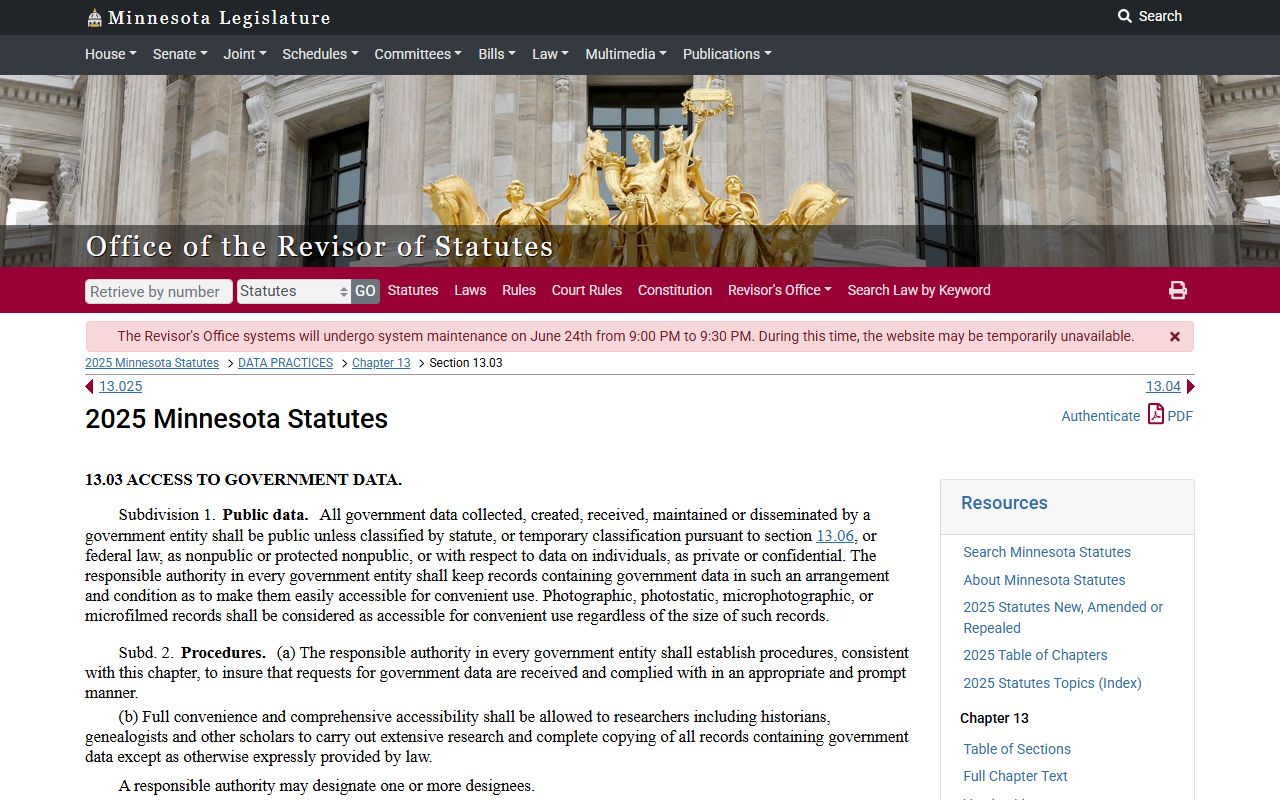
That statute is one of the reasons traffic records are often public, but the court rules still limit what can be released, especially when the record is connected to a protected case type.
Key Statutes:
Minnesota Statutes section 13.03 - main public-access rule for government data.
Rule 4 of the Minnesota Rules of Public Access - defines when case records are open or restricted.
Court Traffic Records vs State Driver Records
The county court record and the state driver record are different files. The court file tells you what happened in the case, who appeared, and how the citation was resolved. The driver record tells you what the state has on the license side, including convictions, license status, or other DMV-style history. If you need proof of a court payment or hearing, stay with the court file. If you need license history, use the driver record.
| Record Type | Source | What It Shows | How to Access |
|---|---|---|---|
| Court Traffic Record | Sibley County District Court | Case details, hearing status, disposition, fine | MCRO, payment portal, or court office |
| State Driver Record | Minnesota DPS / Driver and Vehicle Services | Conviction history, license status, points, issuance data | State driver record request process |
CDL and Commercial Driver Records
Commercial drivers need to treat traffic citations carefully because the court result can affect both the court file and the commercial driving record. Even a small traffic case can have a larger effect for a CDL holder than it does for a regular license holder. The district court file is still the record that shows the court outcome, but the driver record may carry the licensing consequences.
DUI and DWI Cases
DUI and DWI matters often begin with a traffic stop, but they do not stay in the traffic bucket for long. Once the charge becomes criminal, the county attorney page and the criminal court record page become more useful than the basic traffic payment screen. If you need the criminal charge details, use the criminal case file and not just the citation result.
For related criminal case information, see Sibley County criminal records.
Deferred Adjudication and Defensive Driving Course
Traffic cases sometimes qualify for a diversion-style or deferred outcome, but the public records path still runs through the district court file. If a course, waiver, or payment arrangement is allowed, it will appear in the case history or in the instructions from the court. Do not assume a traffic school option exists until the court confirms it for the exact citation.
Sealing or Expunging Traffic Records
Some traffic-related records can be limited, sealed, or removed from public view, but the rule depends on the case type and age of the record. Juvenile traffic matters have extra restrictions, which is why the juvenile records statute matters to the public-access discussion. If the traffic matter is tied to a juvenile case, the district court record may be available only in a limited form.
The juvenile records statute is the clearest example of how a traffic case can become restricted even when the same offense would otherwise be visible in a regular adult court file.
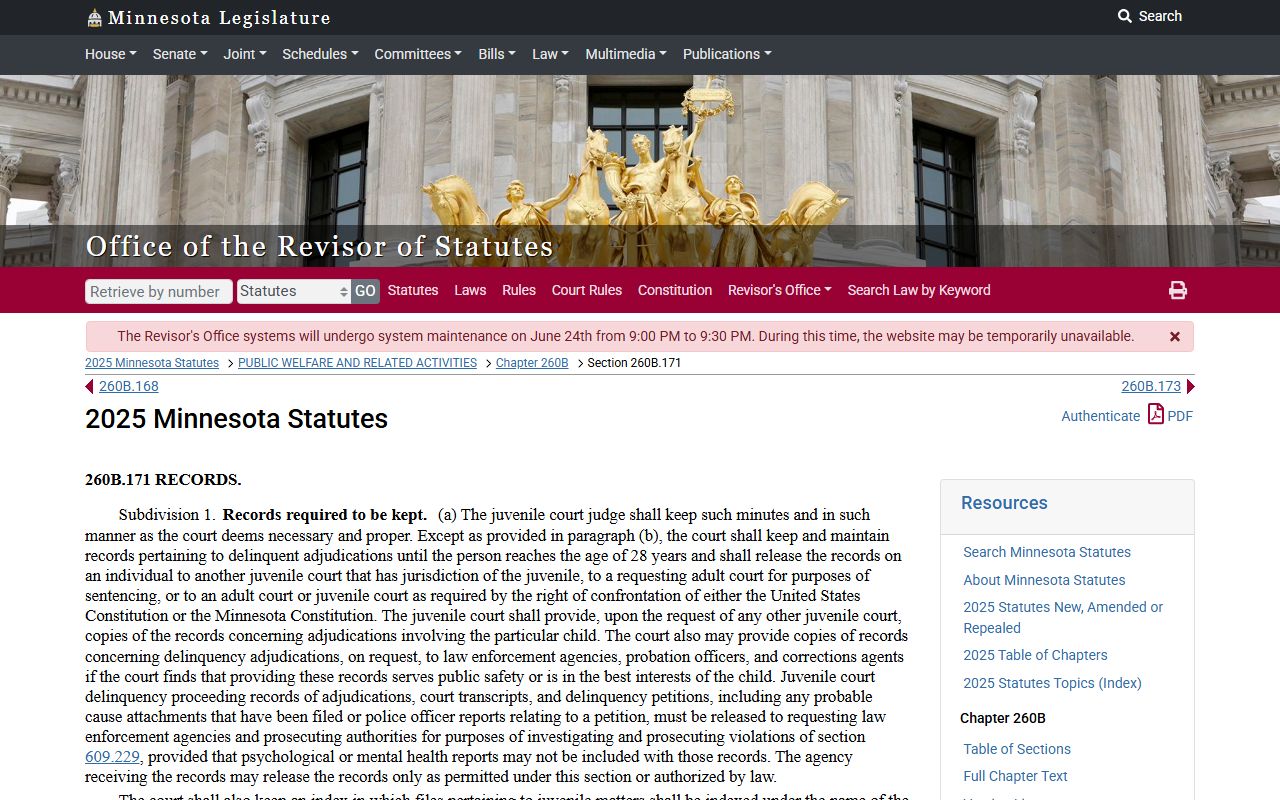
When the traffic case is juvenile, the public record can be narrower than the adult court file, so the statute matters as much as the citation number.
Fees for Traffic Record Copies
Fees for traffic record copies follow the district court fee schedule rather than a separate traffic-only price sheet. Plain copies, certified copies, and search fees can vary by document type, and a state driver record has its own fee structure on top of that. When the request is to the court, ask for the court file. When the request is to the driver agency, ask for the driver record.
| Item | Amount |
|---|---|
| Plain copy per page | Per district court fee schedule |
| Certified copy per page | Per district court fee schedule |
| Records search fee | Per district court fee schedule |
| Driver record (state) | Separate DPS fee schedule |